
What is UCaaS? The Definitive UK Business Guide to Unified Communications as a Service
The future of business communication is unified. Stop juggling disparate apps for voice, video, and messaging. Discover how a single, integrated UCaaS platform streamlines your operations, fuels hybrid work, and delivers unparalleled commercial resilience for your UK business.
2027 PSTN switch-off ready
5★ Rated

25+ Years’ UK Telecoms Experience
1,000+ Businesses Connected
99.9% Uptime SLA Guarantee
UK-Based Personal Support & Engineering
UCaaS stands for Unified Communications as a Service. It is a cloud-delivered model for business communication that integrates all essential tools—including telephony (VoIP), messaging, video conferencing, team collaboration, and contact center functionality—into a single, secure platform accessible from any device. UCaaS centralizes these technologies to improve user experience, streamline IT management, and enhance overall organizational productivity.
Introduction: The Shift from Phone System to Unified Platform
For too long, your communication strategy has been fractured. You likely manage a traditional PBX for desk phones, a separate application for video meetings, an instant messenger for internal chat, and a collection of expensive mobile contracts—all overseen by a frustrated IT manager. This patchwork approach is not only inefficient and costly but actively undermines productivity and inhibits the agility your modern UK business needs.
The foundational challenge faced by every growing organisation is no longer how to make a call, but how to unify the entire communications stack so that employees can collaborate seamlessly from any location, on any device.
This is where Unified Communications as a Service (UCaaS) enters the picture. UCaaS is the strategic evolution of the simple Voice over IP (VoIP) phone system, bundling all essential tools—voice, video, messaging, and more—into a single, cloud-delivered platform. It is a subscription-based service, managed entirely by the provider, designed to replace the complexity and rigidity of legacy hardware with a flexible, OpEx-friendly digital workspace.
If your business is preparing for the 2027 PSTN Switch-Off, enabling a hybrid work model, or simply looking to dramatically increase employee productivity, then understanding UCaaS is your next mandatory step. This definitive guide will walk you through the technology, clarify the crucial differences between UCaaS and basic VoIP, explain the core components, and detail the strategic advantages of choosing a specialised UK partner like Stride to deliver it.

How UCaaS Works: The Cloud Architecture Explained
UCaaS is a service model, but its operational efficiency is rooted in its underlying technical architecture. Unlike traditional communication which relies on physical wires and on-site hardware (the PBX), UCaaS relies on three core technologies working together in the cloud.
1. The Core Engine: Voice over Internet Protocol (VoIP)
Voice is the foundation of UCaaS, and it is powered by VoIP.
Conversion: When a user speaks, the UCaaS client (the mobile app, desktop softphone, or IP desk phone) converts the analogue sound waves into compressed digital data packets.
Transmission: These packets are sent over the public internet or a dedicated private network (MPLS/SD-WAN) using protocols like SIP (Session Initiation Protocol) for signalling and RTP (Real-time Transport Protocol) for the audio media itself.
Reception: The data travels to the cloud-hosted UCaaS platform, which routes it to the intended recipient, where it is quickly reassembled back into sound.
2. The Delivery Hub: The Cloud Infrastructure
The UCaaS system operates entirely from the provider's secure, geo-redundant data centres (Cloud PBX).
Multi-Tenancy: The most common architecture for SMEs is multi-tenancy. This means the provider runs a single instance of the UCaaS application, and multiple customers (tenants) securely share the software and hardware resources. This efficiency is what makes the subscription model cost-effective.
Centralised Processing: The cloud infrastructure handles all the intelligence:
Call Routing (IVR): Managing where calls go based on rules, time of day, or agent availability.
Data Storage: Hosting voicemail, call recordings, chat history, and configuration files.
Security: Providing end-to-end encryption (TLS/SRTP) and running continuous network monitoring.
3. The Front-End: Software-Defined Endpoints
The final critical layer is the endpoint—the software or device your employees use.
Software Clients: Employees access the full UCaaS feature set via a dedicated desktop client, a web browser (using WebRTC), or a secure mobile application. These clients are designed for functional parity, ensuring the experience is consistent regardless of the device.
APIs and Integration: A key function of the UCaaS platform is using APIs (Application Programming Interfaces) to connect the communication tools with business applications like CRMs (e.g., Salesforce). This allows actions in one system (like receiving a call) to trigger an event in another (like popping up a customer's record), fundamentally unifying business processes.
Why UCaaS is the Mandatory Successor to Traditional Phone Systems
UCaaS directly addresses the three greatest pressures on modern UK organisations: the PSTN switch-off, the operational requirement of hybrid work, and the strategic need for simplified IT management.
The UK PSTN Switch-Off: The Hard Deadline
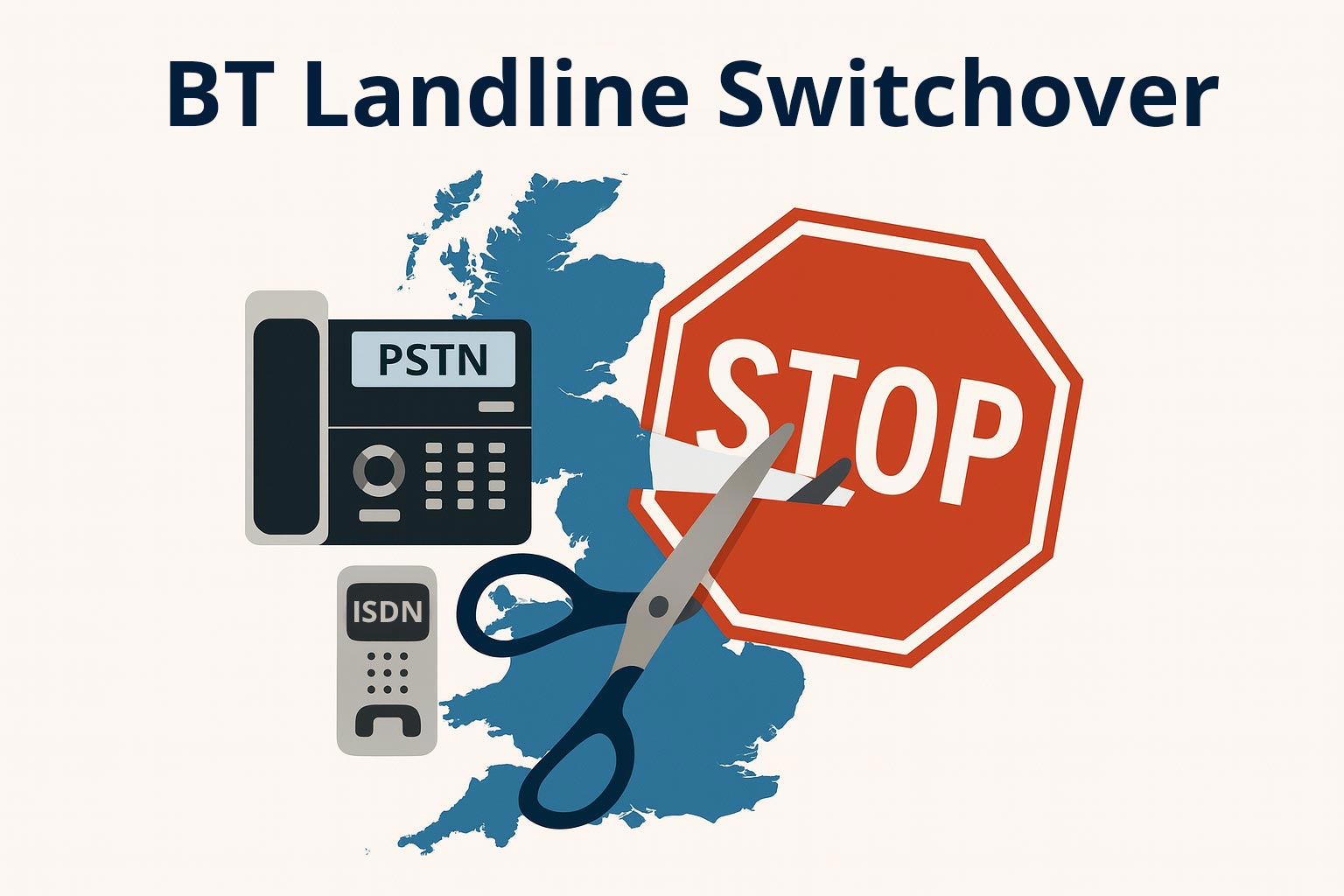
The looming PSTN (Public Switched Telephone Network) switch-off is the single greatest driver for adopting UCaaS in the UK. By 2025, all traditional copper-wire telephone services, including ISDN and basic analogue lines, will be retired. This is not optional.
The VoIP Bridge:
The first wave was basic VoIP, which simply translates voice into data packets over the internet.
The UCaaS Destination:
UCaaS represents the final, strategic destination. It wraps the VoIP voice engine in a full suite of collaboration tools, future-proofing your business beyond the 2025 deadline.
Discover the foundational voice technology with our guide to The Voice Technology.
Enabling the Productive Hybrid and Mobile Workforce
The post-COVID working model is irrevocably hybrid. A phone system tethered to an office desk instantly fails this test. A UCaaS solution delivers true device independence and mobility:
Ubiquitous Presence:
Staff log into a single platform via desktop client, web browser, or mobile app with a consistent experience.
Unified Identity:
One professional number rings on all devices, ensuring no critical business call is missed.
Seamless Hand-Off:
Start a call on your mobile and instantly transfer it to your desktop client without disconnecting the customer.
UCaaS vs. Hosted VoIP vs. SIP Trunking: Clarifying the Three Core Options
Understanding the key differences is critical for making the right architectural choice for your UK SME. The choice hinges on two main factors: The Scope of Features and The Location of the Hardware Management.
| Feature | 1. Full UCaaS (Unified Communications as a Service) | 2. Hosted VoIP (Cloud Phone System) | 3. SIP Trunking (Hybrid UC) |
|---|---|---|---|
| Primary Function | Complete, integrated business platform. | Voice-centric cloud phone system. | Connectivity bridge for legacy PBX. |
| Core Components | Voice, Video Conferencing, Team Chat, Presence, File Sharing, CRM Integration. | Voice, Basic Chat/Presence, Mobile App. | Voice connectivity only. |
| Collaboration | Full Feature Set: Dedicated meeting rooms, screen sharing, deep integrations. | Limited: Typically basic 1-to-1 video/chat. | None: Relies on third-party apps. |
| Hardware Required | Zero. The entire PBX brain is in the cloud. | Zero. The PBX brain is in the cloud. | Required. You must retain and manage your existing on-site PBX hardware. |
| Management | Fully Managed by Stride (Software, updates, hosting). | Fully Managed by Stride (Updates, hosting). | Split Responsibility. Stride provides the external lines; you manage the PBX. |
| Cost Model | OpEx (Monthly subscription per user). | OpEx (Monthly subscription per user). | OpEx for lines, plus CapEx/Maintenance for PBX. |
| Best For... | Businesses demanding hybrid work, high productivity, deep software integration (e.g., Salesforce, HubSpot). | SMEs requiring cost savings, simple voice routing, and ISDN replacement with zero hardware. | Businesses with high investment in a recent PBX that they must retain (e.g., 3-5 more years). |
The Critical Takeaway:
While Hosted VoIP is the direct replacement for ISDN and handles voice brilliantly, UCaaS is the true digital transformation tool. If your business needs to integrate voice with video meetings, internal team chat, and CRM systems, you need a full UCaaS stack.
The 7 Essential Components of a True Unified Communications Platform
A UCaaS solution is defined by its ability to seamlessly weave multiple communication technologies together under a single pane of glass. Ensure your platform provides all seven core components:
1. Enterprise-Grade Voice (The Foundation)
Carrier-grade resilience, crystal-clear HD call quality, advanced routing (IVR), and secure call recording for compliance.
2. Integrated Video Conferencing
Instantly launch or escalate a voice call into a secure, multi-party video meeting with screen sharing and recording.
3. Team Messaging and Chat
Real-time 1-to-1 and persistent group channel messaging, file sharing, and thread replies—the digital watercooler.
4. Presence and Status Indicators
Instantly see real-time availability (Available, In a Meeting, On a Call) to eliminate internal phone tag and speed up collaboration.
5. Mobility and Apps
The platform must function perfectly on high-quality desktop softphones (PC/Mac) and secure, feature-rich mobile apps (iOS/Android).
6. Collaboration Tools
Beyond chat, this includes real-time co-editing of documents, centralised file storage, and virtual whiteboarding for brainstorming.
7. Essential Business Integrations (CRM & ERP)
The platform must offer pre-built connectors or open APIs for crucial business applications like Salesforce and Dynamics 365 to auto-pop records on incoming calls, generating significant ROI. Internal Link: Explore the deeper functionality that drives business efficiency in our guide to Advanced VoIP Features.
UCaaS Deployment Models for UK SMEs
Stride offers three primary deployment architectures, allowing you to choose a UCaaS pathway that aligns precisely with your existing hardware investment and IT strategy.
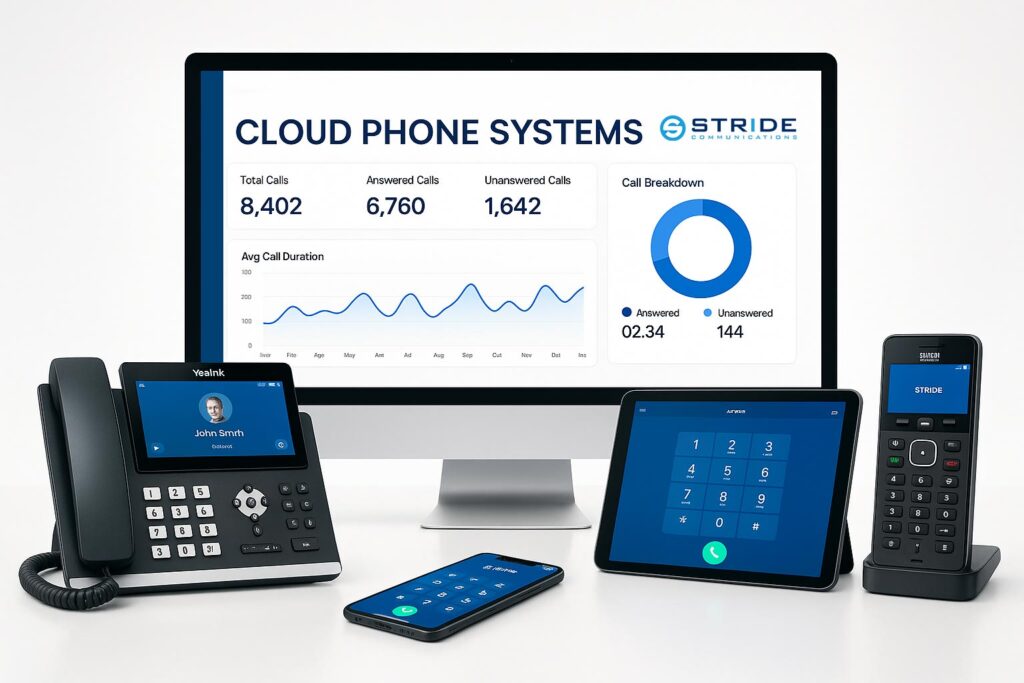
Cloud PBX (Fully Managed UCaaS)
Description: The entire telephone system (the PBX brain) is hosted and managed in Stride’s secure cloud data centres. Staff access the system via the internet using IP desk phones, softphones, or mobile apps.
Best For: SMEs, startups, and businesses looking to completely retire their legacy hardware, reduce CapEx to zero, and embrace a pure OpEx model.
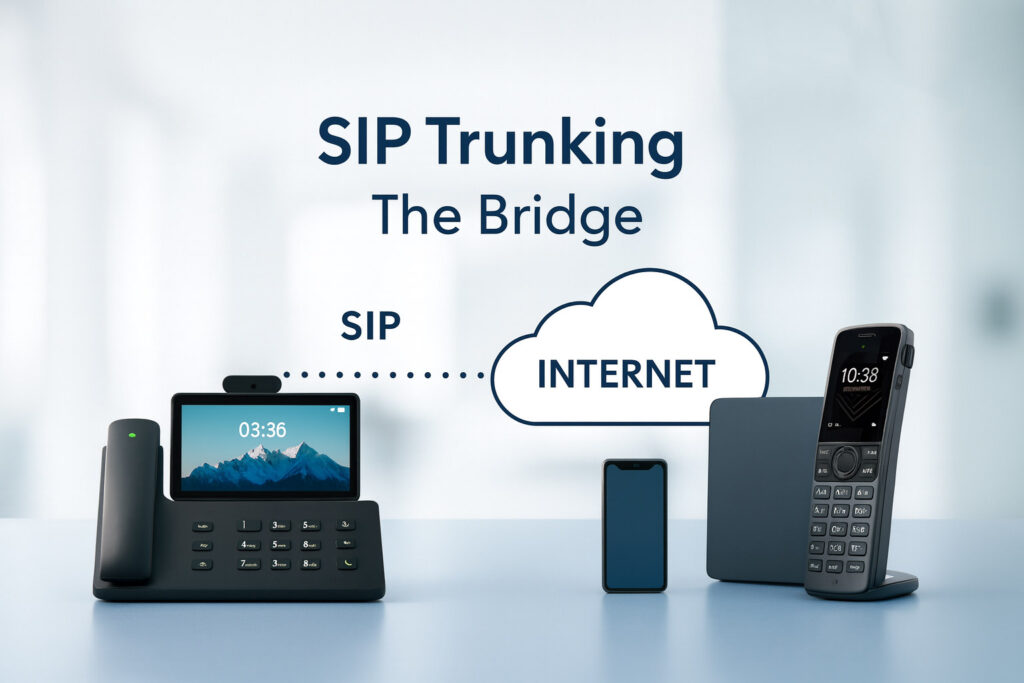
Hybrid UC (SIP Trunking Integration)
Description: If your business has a relatively modern (but non-cloud) PBX on-site, we use SIP Trunking to connect it to the modern digital network. This replaces your expensive, outgoing ISDN lines.
Best For: Businesses with recent, high-capital PBX investments that still have many years of use left, but want to cut ISDN costs and leverage VoIP rates.
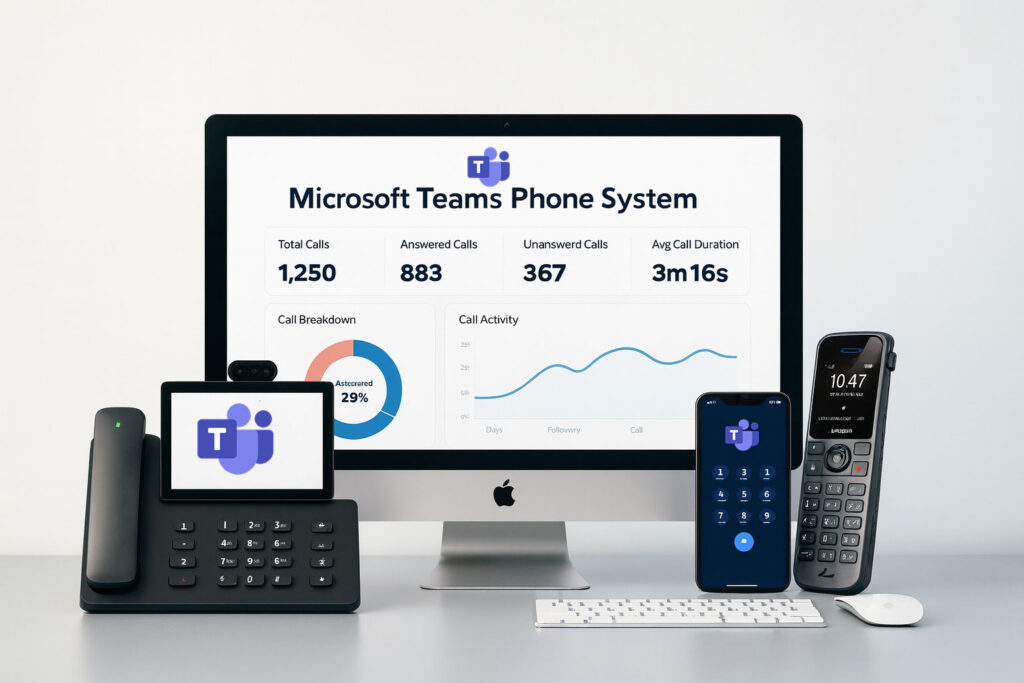
Microsoft Teams Voice Integration
Description: For organisations deeply invested in Microsoft 365, Stride connects your Teams application directly to the PSTN using Direct Routing. This transforms Teams into a full, enterprise-grade phone system.
Best For: Businesses where internal collaboration already happens exclusively within Teams. It unifies all voice (internal and external) into the single, familiar Teams interface.
Choosing the Right Fit: A Decision Tree for Your Business
Selecting the right UCaaS architecture is a strategic decision. Use this structured approach to guide your choice:
| Your Business Scenario | Go to... |
|---|---|
| "We have no PBX, or our PBX is over 7 years old. We want to work remotely and reduce IT management." | ☁️ Cloud PBX (Fully Managed UCaaS) |
| "We have a modern PBX (less than 5 years old) that we want to keep, but we need to eliminate ISDN and cut call costs." | 📞 Hybrid UC (SIP Trunking) |
| "We use Microsoft Teams for all internal chat and meetings and want to make external calls directly from the Teams App." | 🔄 Microsoft Teams Voice Integration |
| "We are a high-volume, multi-site organisation needing a 99.999% SLA, deep CRM integration, and compliance recording." | 🏢 Enterprise Phone System (Advanced UCaaS) |
The Real ROI of UCaaS: Beyond the Cost Savings
The true Return on Investment (ROI) is found in strategic business outcomes.
1. Productivity Gains
UCaaS consolidates voice, chat, and video, significantly reducing the loss of focus from 'context switching.' Expect a 15-20% gain15 in non-customer-facing administrative time.
2. Enhanced Customer Experience
Integrated Call Reporting monitors Average Handle Time (AHT) and Answer Speed (ASA) in real-time, allowing managers to allocate resources proactively (e.g., during a GP surgery's 8 am rush).
3. Future Scalability
Replace unpredictable CapEx with transparent, low OpEx per-user subscription. Licenses are provisioned and deactivated in minutes, adjusting instantly to seasonal surges.
UK Security, Compliance, and Data Residency
For UK businesses, choosing a provider with local authority and infrastructure is non-negotiable. Stride is a UK-focused partner.
All mission-critical data, including call recordings and configuration files, is hosted exclusively within secure, geo-redundant UK data centres.
GDPR:Hosting within the UK ensures automatic alignment with stringent UK GDPR and Data Protection Act requirements.
Sovereignty:Your sensitive communications remain under UK legal jurisdiction.
Data Residency and GDPR Compliance
Five-nines uptime via dual centres and encrypted TLS/SRTP traffic ensures secure, uninterrupted communications with carrier-grade reliability.
99.999% SLA:Five-nines uptime through dual data centres and multiple network interconnects.
End-to-End Encryption:Voice and media traffic is encrypted using TLS and SRTP protocols.
Carrier-Grade Resilience
What Our UCaaS Customers Say on Google
Real results from UK businesses who made the switch
1000+ UK businesses trust Stride | 5/5 average rating | 98% first-contact resolution
Critical Questions for UK UCaaS Providers
Use these four questions to assess any potential vendor and ensure they meet the specific needs of a UK-based, growing business.
What is the difference between UCaaS and Hosted PBX?
Hosted PBX (Private Branch Exchange) primarily offers only the voice telephony service from the cloud, whereas UCaaS is a comprehensive suite that bundles voice with video, messaging, presence, and collaboration tools into a single, integrated platform.
Is UCaaS more secure than on-premise systems?
Modern UCaaS providers generally offer robust security, including end-to-end encryption, regular security updates, and compliance certifications (e.g., SOC 2, ISO 27001). While on-premise security relies entirely on the local IT team, UCaaS security is managed 24/7 by the provider’s dedicated experts.
What is a "softphone" in the context of UCaaS?
A softphone is a software application that allows users to make and receive voice calls over the internet using a computer or mobile device, effectively replacing a physical desk phone. It is a core feature of UCaaS, supporting mobility and remote work.
How does UCaaS improve team collaboration?
UCaaS improves collaboration by providing a single interface for real-time communication (chat, calling, video), presence indicators (available, busy, away), and shared workspaces, reducing communication friction and the reliance on email for quick decisions
What kind of internet bandwidth is required for UCaaS?
The required bandwidth depends on the usage, but generally, at least 100 kbps per concurrent voice call and 1–2 Mbps for quality video conferencing is needed. A reliable, high-speed connection with low latency and jitter is critical for maintaining call quality (Quality of Service – QoS).
Can UCaaS integrate with my existing CRM software?
Yes, most leading UCaaS platforms offer native integrations or open APIs that allow deep connections with major CRM, ERP, and helpdesk applications. This enables features like click-to-dial, automatic call logging, and screen pops with customer information.
Request Your Free UCaaS Readiness Audit
Unsure which system is right? Let us do the heavy lifting to define your path to UCaaS.
Audit phone bills and connectivity for voice/video readiness.
Recommend Cloud, Hybrid, or Teams architecture.
Transparent cost comparison & savings projection.
Zero‑downtime migration plan for the PSTN deadline.