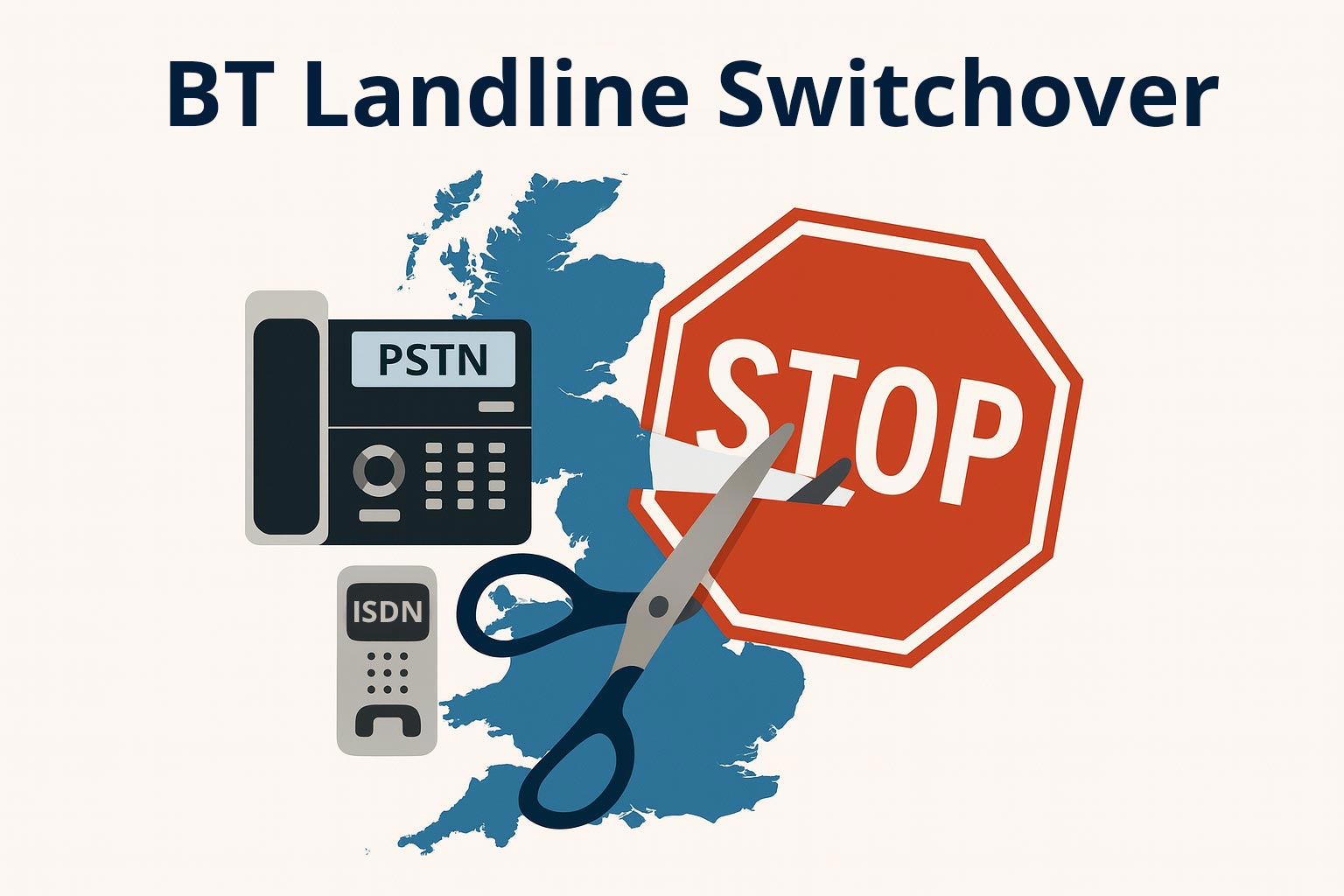

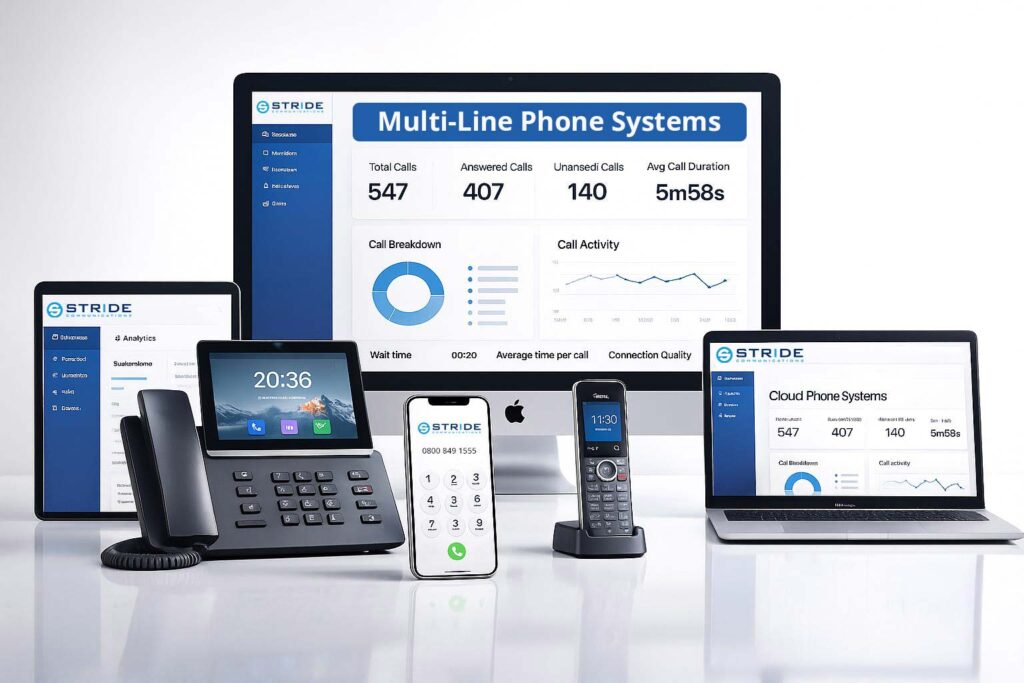
Multi-Line Phone Systems: Capacity & Scalability
As your business grows, your communication needs shift from simply “making a call” to “managing a professional workflow.” A multi-line phone system is the infrastructure backbone of any professional operation, allowing multiple employees to handle calls simultaneously without customers hearing a frustrating busy signal. Stride Communications helps UK businesses move beyond basic residential-style setups to sophisticated, scalable systems that grow effortlessly alongside their headcount and call volume.
2027 PSTN switch-off ready
5★ Rated
25 Years' UK Experience
Trusted by 1000+ UK Businesses
99.9% Uptime Guarantee
UK-Based Personal Support
Jump to: Key Features | Line Capacity Calculator | Multi-Line Compare | Switching FAQ
The Evolution of Business Connectivity
In the current UK business landscape, the “busy signal” is the single greatest driver of customer churn. When a potential client dials your number, they expect an immediate connection or a professionally routed experience. A multi-line phone system is no longer just about hardware; it is about “Capacity Logic”—ensuring your infrastructure can handle the weight of your success.
Stride Communications specializes in auditing business communication flows within the framework of Unified Communications. We identify where your current system is “bottlenecking” your growth and implement digital-first solutions that ensure every caller reaches the right person, every time.
What defines a Multi-Line Phone System in 2026?
A multi-line phone system is a professional communication network designed to manage multiple concurrent external and internal calls via a single business identity. In the modern landscape, this is achieved through Unified Communications platforms that integrate voice, video, and messaging. Unlike a standard landline, which handles one call per wire, modern multi-line systems utilize a Cloud Phone System and SIP Trunking to create virtual “paths” over high-speed Fibre Connectivity.
How many lines are required for a UK SME?
The industry standard for a Hosted PBX environment is a 1:3 ratio (one concurrent call path per three employees). However, for sales-led organizations or medical practices, a 1:1 ratio is the gold standard to ensure 100% call answer rates.
What is the impact of the PSTN Switch-off on multi-line setups?
Traditional analogue and ISDN multi-line systems are being decommissioned across the UK throughout 2026 and 2027. Businesses must migrate to digital VoIP Phone Systems to maintain their existing numbers and multi-line functionality.
What is a Multi-Line Phone System? (Technical Breakdown)
A multi-line phone system allows a single service connection to handle multiple concurrent calls. Historically, this meant having a bundle of physical copper wires (analogue) or a digital ISDN line entering the building. Today, multi-line functionality is delivered virtually.
Modern systems generally fall into three distinct categories:
Modern systems generally fall into three distinct categories:
1. Virtual/Cloud Multi-Line
The ‘All-in-One’ Solution
The 2026 industry standard. These systems use VoIP technology to host “virtual lines” in the cloud. There is no physical limit to how many calls you can take, provided your internet connectivity bandwidth is sufficient.
Learn more about Cloud Phone System
2. SIP Trunking
The Connectivity Upgrade
Designed for businesses that already have a physical on-premise PBX (Private Branch Exchange) but want to replace expensive traditional lines with modern, digital “paths.”
Learn more about SIP Trunking
3. Legacy Physical Multi-Line
The Hybrid Bridge
Traditional hardware requiring multiple physical wires. These systems are currently being phased out due to the 2026/2027 PSTN Switch-off.
📊 The Stride "Line-Logic" Calculator
Use our 2026 Capacity Estimator to find your ideal VoIP configuration. This tool uses three variables to output a recommended number of “SIP Channels” or Lines.
How it works:
The Formula: ((Staff * Intensity Factor) + Growth Buffer) = Recommended Lines.
- Low Intensity (0.2): Consultancy/Professional Services
- Medium Intensity (0.4): General Office
- High Intensity (0.8): Sales/Support Centres
Estimate your 2026 VoIP capacity requirements.
Recommended Capacity: --
Stride Engineering Insight:
Primary Setup:
Hosted 3CX Platform
Connectivity Req:
Fibre Ethernet (Min 10Mbps Voice-Dedicated)
✓ Migration Status: 100% PSTN-Switch-off Compliant
The Engineering of Clarity: Fibre Connectivity Requirements
For a multi-line system to function at an enterprise level, the underlying network must meet specific Quality of Service (QoS) metrics. Stride Communications audits your Fibre Connectivity against these three “Perfect Call” benchmarks:
Latency (<150ms)
To ensure your multi-line system feels “instant,” one-way latency must be kept under 150 milliseconds. Anything higher results in the “walkie-talkie” effect.
Jitter (<30ms)
Jitter measures the variance in packet arrival. We enforce a limit of <30ms to prevent “robotic” voice quality during high-capacity usage.
Packet Loss (<1%)
In a Hosted PBX environment, packet loss is the enemy. Even a 1% loss can cause call drops. Stride uses specialized routers to prioritize voice packets over standard data traffic.
Industry-Specific Capacity Guides

Medical & Dental Practices
The Problem: The “Peak Morning Rush.” Between 8:00 AM and 9:30 AM, these businesses experience 80% of their daily call volume.
The Stride Solution: We implement a 1:1 ratio of lines to staff for these hours. Our Small Business Phone Systems use elastic cloud scaling to handle this burst capacity.

Legal & Professional Services
The Problem: Compliance and Encryption. Firms must adhere to MiFID II or GDPR while handling sensitive multi‑party calls.
The Stride Solution: We provide extra bandwidth headroom for encrypted streams and integrated call recording. By utilizing a Hosted PBX, all recordings are stored securely in the cloud with full audit trails.
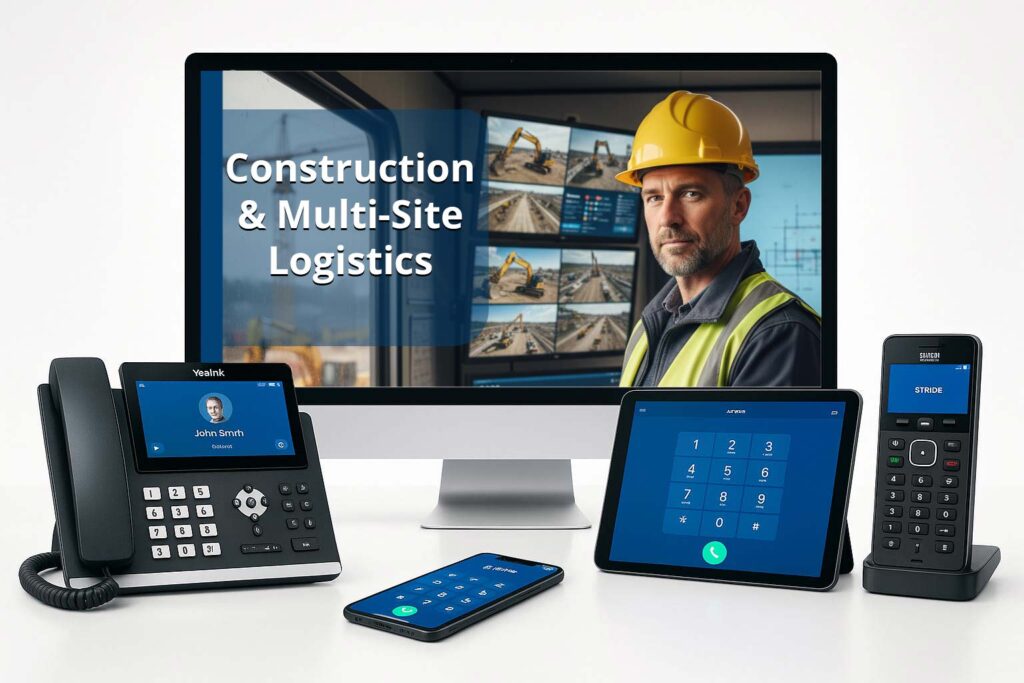
Construction & Multi-Site Logistics
The Problem: Fragmented offices. Site cabins often lack fixed lines, leading to missed calls.
The Stride Solution: We link site offices to the main multi‑line system via connectivity solutions like 4G/5G failover, creating a single Unified Communications network.
2026-2027 Migration Countdown: The PSTN Switch-off
As of January 2026, BT Openreach has officially ceased all “Stop-Sell” exemptions for analogue lines. If your business is still relying on a traditional copper multi-line setup, you can no longer add new lines or move your service without switching to digital.
The countdown is now critical:
- 2026: Final testing phase for national digital infrastructure.
- 2027: Full decommission of the traditional PSTN/ISDN network.
Stride Communications provides a dedicated Business VoIP Migration Service to ensure your transition is seamless.
PSTN Switch-off Countdown
Traditional copper-based phone lines are reaching their end of life. The time to migrate is now.
00
Days
00
Hrs
00
Mins
00
Secs
2026: Final testing phase for national digital infrastructure. BT Openreach has ceased all "Stop-Sell" exemptions.
2027: Full decommission of the traditional PSTN/ISDN network across the UK.
How Many Phone Lines Does My Business Need?
One of the most common questions Stride Communications receives is: “How do I calculate line capacity?” You don’t necessarily need one line per person; you need enough lines for your peak concurrent call volume.
| Staff Size | Recommended Lines/Channels | Typical Use Case |
|---|---|---|
| 1-5 Employees | 2 - 4 Lines | Small Business Phone Systems |
| 6-20 Employees | 5 - 12 Lines | Multi-Line Phone Systems for growing offices |
| 21-50 Employees | 15 - 30 Lines | VoIP Systems for busy sales teams |
| 50+ Employees | 1:1 Ratio or SIP Trunking | Enterprise Phone System Solutions |
!
Stride Proprietary Insight: The Readiness Scorecard
If your business frequently utilizes Call Recording, AI Transcription, or hosts multi-party video conferences, Stride Communications recommends increasing your estimated capacity by 20%.
In 2026, high-definition (HD) voice data requires greater bandwidth overhead than legacy compressed audio.
In 2026, high-definition (HD) voice data requires greater bandwidth overhead than legacy compressed audio.
2026 Bandwidth Optimization Standard
Key Features of Multi-Line Management
Simply having “more lines” is useless without the intelligent tools to manage the traffic. Stride Communications integrates the following core features into every multi-line deployment:
Hunt Groups
Hunt groups ensure that an incoming call "hunts" for the next available person. If the Receptionist is on Line 1, the system automatically rings the Office Manager on Line 2. This creates a seamless experience for the caller.
Auto-Attendant (IVR)
A virtual receptionist that directs callers to the correct department. By using an IVR (Integrated Voice Response), you can segment your lines so that "Sales" always has priority capacity over "General Enquiries."
Call Parking
Unlike traditional systems where a call is "held" on a physical handset, Call Parking allows an employee to "park" a call in the cloud. Any other employee, whether in the office or working remotely, can pick up that call using a simple code.
Presence (BLF)
In a multi-line environment, it is vital to see who is available. BLF lights on your VoIP Handsets show instantly who is on a call, preventing internal confusion and dropped transfers.
Adding vs. Upgrading: Scaling Your Lines in 2026
Are you hitting your capacity limit? You have two paths, but only one is future-proof:
The Legacy Path: Adding Analog/ISDN Lines
Adding traditional lines is often costly, slow, and requires physical engineer visits to install new sockets. Furthermore, with the 2026/2027 PSTN Switch-off, these legacy lines are being retired. Investing in copper-based multi-line hardware today is a "sunk cost" that will require a full replacement within the next 12 to 18 months.
The Modern Path: Upgrading to Cloud (VoIP)
By switching to a Cloud Phone System , adding a new "line" or "user" is as simple as clicking a button in a digital dashboard. This virtual scalability allows businesses to "burst" their capacity during busy seasons (like Black Friday or end-of-quarter) and scale back down when demand drops, ensuring you only pay for what you use.
Multi-Line Technology: VoIP vs. Traditional Hardware
| Feature | Traditional Multi-Line | VoIP Multi-Line (Stride) Top Pick |
|---|---|---|
| Setup Cost | High (Wiring & Sockets) | Low (Plug & Play) |
| Scalability | Limited by physical ports | Virtually Unlimited |
| Flexibility | Fixed to a single desk | Work from anywhere via app |
| Maintenance | On-site engineer visits | Managed 24/7 remotely |
| Future Proof | No (End of Life 2025/26) | Yes (Digital Standard) |
Best Multi-Line Desk Phones for Small Business (2026 Picks)
If your team prefers a physical handset, you don’t need expensive legacy equipment. Modern VoIP phones provide multi-line functionality over a single network cable. Here are the top-rated models for UK small businesses.
Looking for the right hardware? View all multi-line VoIP phones in our catalogue to find the perfect match for your office setup.
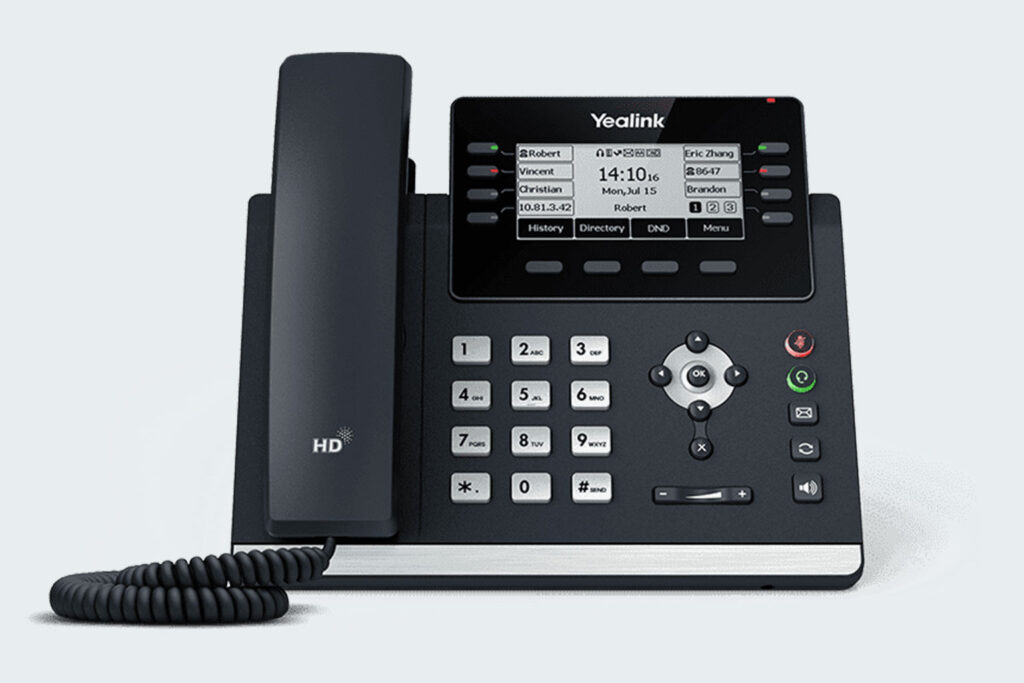
1. Best for Micro-Business & Retail (2-Line Capacity)
Model: Yealink SIP-T31P
Why it works: Ideal for reception desks or small shops that need to handle a main line and a hold line simultaneously. It features an extra-large screen for caller ID and noise-filtering technology to block out background chatter.
Key Specs: 2 VoIP Accounts | HD Voice | Backlit Screen.
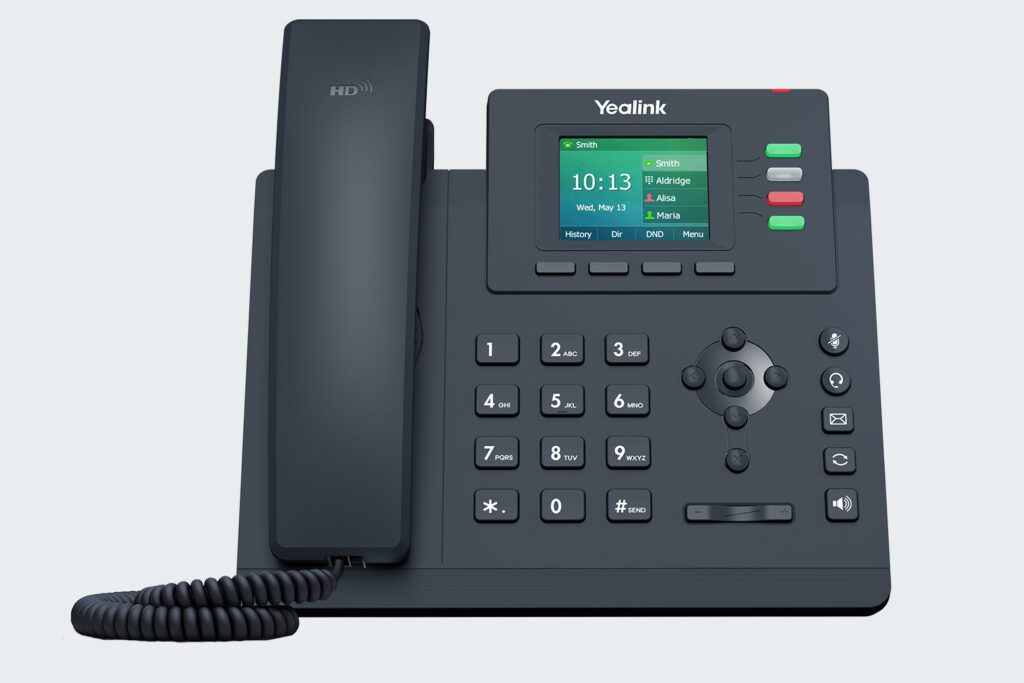
2. Best for General Office & Sales (4-Line to 6-Line Capacity)
Model: Yealink SIP-T43U
Why it works: The workhorse for most small offices. It allows staff to monitor multiple shared lines (e.g., “Sales Line” and “Support Line”) on a single device using dedicated line keys.
Key Specs: 12 SIP Accounts | 2 x USB Ports (for Bluetooth/WiFi) | Paperless Label Design.
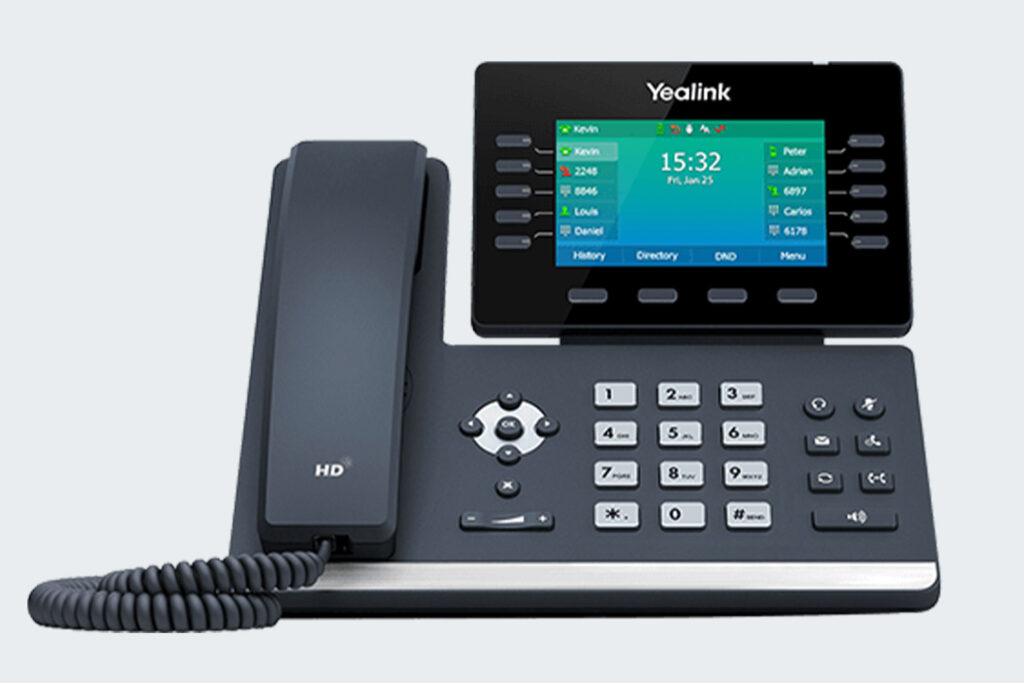
3. Best for Receptionists & Managers (10+ Line Capacity)
Model: Yealink SIP-T54W
Why it works: Designed for power users who manage high call volumes. The adjustable colour screen and built-in Bluetooth make it perfect for multitasking. It supports “Expansion Modules” (sidecars) to let you see the status of up to 60+ lines or staff members at once.
Key Specs: 16 SIP Accounts | Built-in WiFi/Bluetooth | Adjustable Colour Screen.
Why Choose Stride Communications?
At Stride Communications, we don’t just sell “lines”; we architect communication workflows. We focus on consultative capacity planning to ensure your business is neither under-equipped nor over-paying. Whether you prefer the collaborative power of a Microsoft Teams Phone System or the feature-rich depth of a 3CX Phone System, we tailor the capacity to your specific needs.
Stride Migration Risk Index (Exclusive)
Before we perform a VoIP Installation to upgrade your multi-line capacity, we evaluate three critical risk factors:
1. Connectivity Reliability:
Does your current broadband have the SLA required for 20+ concurrent high-def calls?
2. Hardware Compatibility:
Are your existing handsets capable of handling multiple SIP registrations?
3. Emergency Services (999/112):
Does your system correctly transmit location data for all virtual extensions?
Illustrative Example
Scaling for Success: Buckinghamshire Case Study
A professional services firm in Buckinghamshire grew from 8 to 25 employees in less than a year. Their traditional 4-line system was constantly "engaged," leading to lost contracts. Stride Communications implemented a 3CX Phone System with unlimited virtual lines.
300%
More Calls Handled
35%
Cost Reduction
Zero
Hardware Downtime
What Our Customers Say on Google About Our Multi-Line Phone Systems
Real results from UK businesses who made the switch
1000+ UK businesses trust Stride | 5/5 average rating | 98% first-contact resolution
FAQs: Common Questions on Line Capacity
Do I need to install new phone wiring for a multi-line system?
No. Unlike traditional ISDN systems that required separate copper wires for each line, modern multi-line VoIP systems run on your existing computer network (Ethernet) or WiFi. If you have internet access, you already have the wiring you need.
How long does setup take?
Same-day (mobile app only), 1–2 weeks (small business), 2–4 weeks (multi-site). Stride averages 10 working days with zero disruption.
Can I keep my existing business phone number?
Yes. We can port your existing 01, 02, or 0800 numbers to the new multi-line cloud system. You won’t need to change your signage or stationery.
How reliable is VoIP?
With proper setup: more reliable than traditional lines. We offer 99.9% uptime SLA, geo-redundant UK hosting, and 4G backup options. Internet downtime is rare in 2025 UK.
Is VoIP secure?
Yes. We use:
- End-to-end encryption
- UK-hosted data (never leaves jurisdiction)
- GDPR/FCA/NHS DSP compliance
- Role-based access + annual security audits
What handsets should we buy?
Options:
- No handset: Mobile/desktop app (best for remote teams)
- IP Phones: £80–200 (Yealink, Poly, Cisco)
- Avoid legacy phones: Require converter, more expensive
Recommendation: Start with app + few desk phones.
Contract length?
Month-to-month available. No lock-in. Annual option (10–15% savings). Easy to cancel if unhappy.
How many calls can I handle at once?
With cloud multi-line systems, the limit is virtual, not physical. Most small business plans allow for unlimited “concurrent calls” depending on your user licenses. You will never give a customer a busy signal again.
What happens if my internet goes down?
This is the biggest advantage over legacy multi-line phones. If your office internet fails, the system automatically detects it and instantly diverts calls to your mobile app or an external mobile number, ensuring business continuity.
Can I use different phone numbers on the same desk phone?
Yes. A single multi-line desk phone (like the Yealink T43U) can accept calls for multiple different companies or departments (e.g., “Sales” and “Accounts”) with a different ringtone and screen label for each.
Don't Let Capacity Hold You Back
Don’t let a “busy” tone be the reason you lose your next big client. Whether you need a simple two-line setup for a local retail shop or a complex multi-site configuration for a national enterprise, Stride Communications provides the scalable, reliable, and professional infrastructure your business deserves.
Our team of UK-based experts is ready to design a system that fits your current needs while providing a clear roadmap for your future ambitions.
Business Phone System Experts | 25 Years UK Experience | Complete Solution Range | Transparent Advice
Claim Your Free VoIP Trial, Quote & Expert Consultation
Discuss your requirements with our expert team during your free consultation. We’ll assess your connectivity, set up your free VoIP trial, and provide a detailed quote showing exactly how much you’ll save. Simply fill in your details below for your no-obligation trial and quotation, then click ‘Claim My Free Trial & Quote’.